
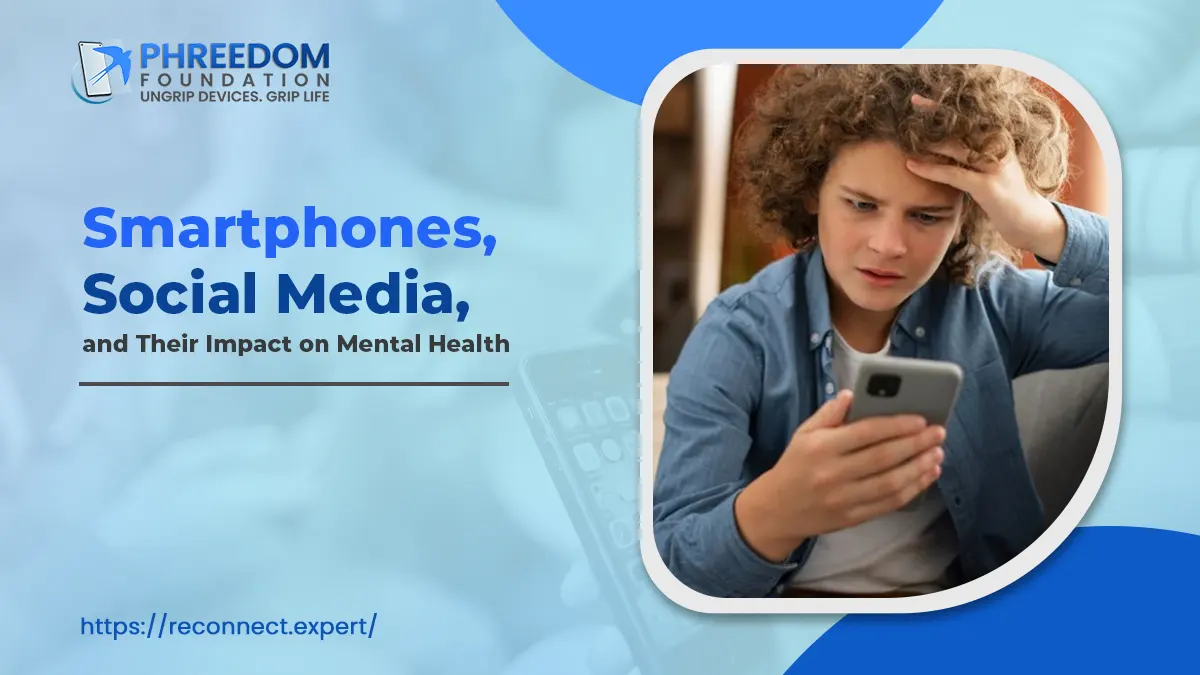
Smartphones, Social Media, and Their Impact on Mental Health
By Nidhi Gupta, MD
Smartphones have become the background soundtrack of modern life. Many of us wake up to them and fall asleep beside them. Notifications, messages, news alerts, and social media feeds are waiting before our feet even touch the floor.
This pattern has quietly become normal.
But common does not mean healthy.
As a physician working with children, families, and organizations, I see the growing impact of constant digital stimulation on our mental health. Smartphones are remarkable tools. They help us communicate, learn, navigate, and manage daily tasks.
The problem is not the device itself.
The problem is what happens when technology shifts from a tool we use to a system that quietly captures our attention.
How Smartphones Begin to Control Our Daily Life
Most people do not intend to spend hours on their phones. It happens gradually.
First, we check messages. Then email. Then a quick look at social media. One video leads to another, and suddenly an hour has passed.
The human brain is not designed to resist constant digital rewards. Notifications, likes, comments, and new content trigger small bursts of dopamine, the brain’s reward chemical. Over time, this creates a powerful habit loop.
Even when the phone is silent, the mind waits for the next alert.
That constant anticipation fragments attention and increases stress.
Many people notice the symptoms but do not connect them to their digital habits:
- Difficulty focusing
- Feeling mentally tired despite resting
- Irritability or emotional exhaustion
- A constant sense of urgency
The brain never fully powers down.
The Hidden Cost of Smartphones on Sleep
One of the most overlooked effects of smartphone use is its impact on sleep.
Many people scroll through social media in bed, telling themselves it will only take a few minutes. But blue light from screens interferes with the body’s natural sleep rhythm, suppressing melatonin and keeping the brain alert.
Even more disruptive is the mental stimulation. Social media, news, and notifications keep the brain active when it should be winding down.
Poor sleep leads to a cascade of mental health challenges:
- Fatigue
- Irritability
- Anxiety
- Difficulty concentrating
- Poor emotional regulation
When sleep suffers, mental health suffers.
Social Media Is Not Exactly Social
Children and adolescents are particularly vulnerable to the effects of social media.
Their brains are still developing, especially the prefrontal cortex, the region responsible for impulse control, emotional regulation, and decision-making. Expecting young people to self-regulate against highly engineered social media platforms is unrealistic.
Social media environments amplify comparison.
Young people see curated images of success, beauty, wealth, and popularity. Their developing brains often interpret these images as reality.
This leads to common mental health challenges including:
- Low self-esteem
- Anxiety
- Loneliness
- Fear of missing out (FOMO)
Even when surrounded by friends, many young people feel isolated.
Cyberbullying adds another layer of harm. Hurtful comments and online harassment can follow children everywhere — into their homes, their bedrooms, and even their sleep.
The result is a growing youth mental health crisis that cannot be ignored.
Adults Are Not Immune to Digital Stress
While much attention is placed on children and teens, adults are also struggling with the mental health effects of constant digital connection.
Workplace expectations have shifted. Emails, messages, and work notifications arrive late at night and early in the morning. The boundary between work and rest has blurred.
At the same time, social media creates a steady stream of comparison. Seeing others’ professional success, vacations, or lifestyle can quietly fuel dissatisfaction and stress.
Many people feel busy all day yet strangely unproductive.
Attention is constantly interrupted.
Research shows it can take 19 to 25 minutes to regain full focus after a distraction. When interruptions happen dozens of times per day, productivity and well-being suffer.
Digital Wellness: A More Balanced Approach
The solution is not eliminating technology. That is neither practical nor necessary.
The goal is balance.
At the Phreedom Foundation, we describe this approach as digital wellness: using technology as a tool rather than allowing it to become a default coping mechanism.
Digital wellness means being intentional about how and when we use our devices.
Small changes can make a significant difference:
- Keeping phones out of the bedroom at night
- Turning off nonessential notifications
- Creating phone-free meals or family time
- Scheduling intentional breaks from social media
- Prioritizing offline activities like walking, hobbies, and face-to-face conversations
These simple habits allow the brain to reset.
They restore attention, calm, and connection.
Reclaiming Attention in a Noisy World
Smartphones and social media are part of modern life, and they bring many benefits. But when our attention is constantly pulled in dozens of directions, our mental health begins to suffer.
Attention is one of our most valuable human resources. It shapes our relationships, our learning, our creativity, and our sense of purpose.
When we protect attention, we protect mental health.
The goal is not less technology.
The goal is more life, more presence, more focus, and more meaningful connection.
At the Phreedom Foundation, our mission is simple: help families, schools, and organizations reclaim their time, attention, and joy in a world filled with digital noise.
Because when we use technology intentionally, it becomes a tool.
Not a trap.