
AI as “homework helper.” Where is the line?
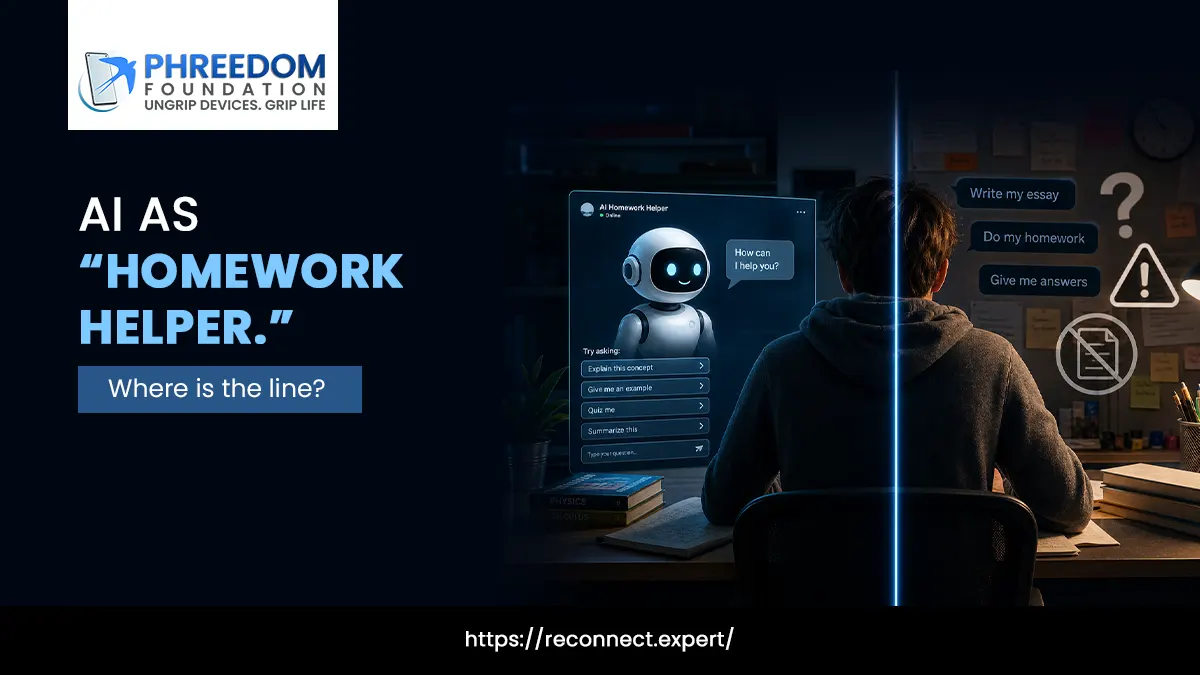
In 2026, we’re seeing AI used as a “homework helper.” Where is the line between a tool that assists learning and one that outsources a child’s critical thinking?
To understand this, we must look at brain development. The prefrontal cortex, the part of the brain responsible for judgment, impulse control, and decision-making, is only about 50% mature by age 18 and continues developing into the mid-20s. Expecting children (or honestly, many adults!) to resist a tool that offers to “polish” or even complete their homework is developmentally unrealistic.
What begins as assistance quickly turns into outsourcing thinking, especially when AI asks, “Would you like me to generate a submission-ready version?” Let us be honest, that is hard to resist!
At this stage, limiting AI as a homework helper may be the safest way to protect critical thinking.
What is the most overlooked digital safety risk for children today that parents aren’t yet discussing?
The overreliance on educational technology, or EdTech. These platforms are marketed as “personalized,” “innovative,” and “future-ready,” which can make school leaders feel pressured to adopt them. Parents, meanwhile, worry that without constant technology exposure their child will fall behind. But that fear is largely a myth!
Large-scale national data increasingly suggest that many EdTech tools are neither effective nor safe. Instead, they expose students to harmful content, distract them from learning, and collect their data for monetization.
Sometimes the most advanced learning tool is still a pencil, paper, and an uninterrupted attention span!
With the rise of the metaverse and immersive technologies, how can parents ensure their children stay grounded in the physical world?
Parents can start by being intentional rather than reactive. That means carefully choosing which technologies enter the home, having the courage to say “no” even when everyone else seems to be saying “yes,” and resisting the herd mentality that equates new technology with better outcomes. It also helps to seek information from independent sources rather than from companies that profit from increased screen engagement.
Children do not need a more immersive digital world. They need deeper immersion in real relationships, movement, and unstructured play.
How should parents navigate the digital footprint they create for their children before the child is old enough to give consent?
The safest default is simple: if a child is too young to meaningfully consent, consider limiting what you post about them online. Even a single photo can be repurposed for identity theft or used in ways families never intended.
Beyond safety, there is also dignity! Today’s cute post can become tomorrow’s unwanted digital history when college applications or future employers search their name.
Are there additional emerging trends or concerns parents should be paying attention to?
Absolutely! Some of them are arriving quietly, disguised as convenience or entertainment:
- AI-powered “smart” toys that listen, respond, and collect behavioral data. These toys may feel interactive, but they could lead to constant surveillance and reduce imaginative play.
- Smartphones and social media use before age 16, which is increasingly linked to sleep disruption, anxiety, and attention challenges during key developmental periods.
- Algorithm-driven educational learning platforms that shape what children see and think without parents fully understanding how recommendations are generated.