
This happens with many people these days. Mobile phones and laptops are useful, but too much use can create a big problem. One message or one short video can easily break our attention.
This kind of distraction has become common. Many people don't even notice how much screen time they have every day. In this article, you will learn how too much screen use affects work, studies, and relationships. You will also see some simple ways to manage it.
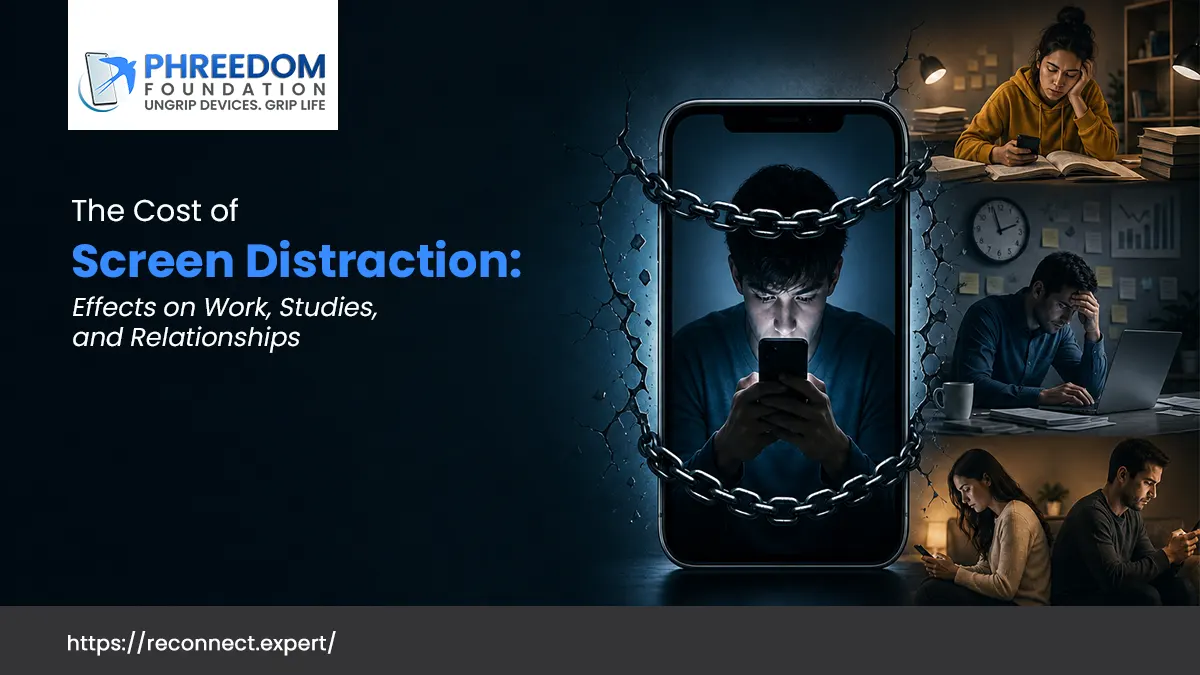
Screens are everywhere now. People use them for office work, online classes, shopping, and entertainment. There is nothing wrong with technology; the problem starts when we cannot control it.
Social media apps and videos are made to keep people busy. A person may open Instagram for two minutes but thirty minutes pass very fast, it happens without even knowing.
Another reason is habit, many people check their phones when they are bored. Slowly this becomes normal, because of this, screen time keeps increasing day by day.
Many people think they can do many things together but changing between work and social media continuously makes the brain tired.
For example, while preparing a report, a person checks WhatsApp then another message comes, after that, they open YouTube. In this way, one hour of work may take two hours.
Because of this, pressure also increases. People feel busy the whole day but still do not finish their tasks.
Focus is important for every job, constant notifications break concentration.
When attention keeps changing, mistakes become common, even small errors can create stress later. This is one reason many companies now suggest taking short breaks from screens during work hours.
Students are facing this problem too. Online learning is useful, but it also brings many distractions.
A student may sit with books but the phone is always nearby, the notifications, reels, and games can easily pull attention away.
Because of this, information does not stay in the mind for long, students often say they studied for hours but still remember very little. Too much screen time also reduces interest in reading and writing, slowly studying starts feeling boring.
When assignments are delayed and exams come near, stress becomes higher.
Late-night phone use is another issue. Many students sleep very late because of social media, lack of sleep affects memory and concentration, so the cycle continues.
People are connected online, but sometimes they become disconnected in real life.
Many families sit together, but everyone is looking at their own screens. There is less talking and less sharing.
Children may feel ignored. Parents also feel that family bonding is becoming weak. Small moments that once brought happiness are often replaced by mobile phones.
It may look normal, but over time it affects relationships.
Relationships need attention but excessive screen time can create distance between people. Imagine two people sitting together but both are busy scrolling, they are physically present, but mentally somewhere else.
Friendships can also suffer, online chats are helpful but real conversations are still important. Human connection needs time and screens should not replace that.
The effects are not limited to work and relationships, health can also suffer. People may face the following:
These problems may look small in the beginning but if ignored, they can affect daily life in many ways. Mental health experts often suggest taking breaks and creating better screen habits, small changes really help.
Not every app needs to interrupt your day. Turning off unwanted notifications can help people stay focused, it is a small change but many people notice better concentration after doing this.
Giving one or two hours every day without screens can help the mind relax. People can spend this time reading, walking, exercising, or talking with family members. These simple activities improve emotional health.
Some apps can track screen time and show where time is being wasted, such tools help people understand their habits better.
Brands and wellness programs that focus on healthy living are also becoming useful for people who want more balance in life.
Distraction caused by excessive screen use is affecting work, studies, and relationships more than many people realize. Growing screen time can reduce focus, increase stress and weaken personal connections.
The good thing is that small changes can bring positive results. Better screen habits, regular breaks and quality time with loved ones can make life more balanced.
If stress, poor concentration, or emotional challenges are affecting your life, it may be time to seek support. The mental health wellness program by Phreedom Foundation helps people build healthier habits and improve emotional well-being.
Taking care of distraction today can help you enjoy a happier and healthier tomorrow.