
We live in an extraordinary time. With a few clicks, a student can access lessons from some of the world's best educators, explore subjects beyond the school curriculum, and learn almost anything from anywhere. That's a remarkable opportunity!
But just because students have access to more information, does that mean they're learning more? Perhaps not!
Over the past decade, schools have invested heavily in 1:1 devices, online Edtech courses and apps, and digital management platforms. The promise has been greater access, personalized instruction, and improved academic outcomes.
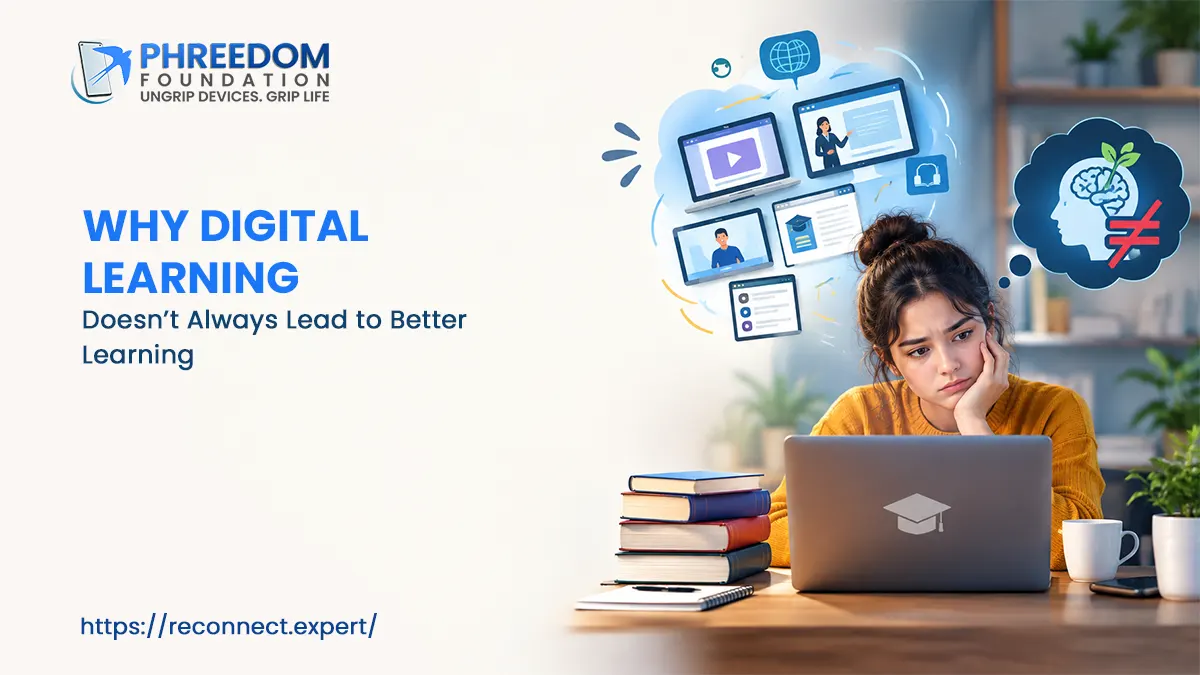
Yet access to information and the ability to understand, retain, and apply that information are two very different things. And confusing the two can come at a cost to children's education.
Imagine two students learning the same concept. One is watching an online lesson on a laptop, with multiple tabs open and other digital distractions just a click away. The other is working through the concept with a teacher, a textbook, and a pencil.
Which student learns more?
The answer might depend on the quality of instruction, the student's needs, and how actively they engage with the material, not simply whether a screen is involved.
One of my biggest concerns about digital learning is the environment in which it happens.
A student may open a laptop intending to complete a math assignment. But the same device may also provide access to games, messaging, videos, shopping, and countless other distractions. Even when those distractions are restricted, navigating multiple tabs, links, and applications can fragment the learning experience. This is especially important for younger students, whose attention and self-regulation skills are still developing.
To learn something deeply, students need time to think, make connections, struggle with difficult concepts, and sometimes get things wrong before getting them right. That process isn't always entertaining. Nor should it have to be.
Think about a student struggling with fractions. Giving that student access to ten additional instructional videos may help. But it may also leave them just as confused as before.
What if the student misunderstood a foundational concept? What if they need someone to identify the mistake, explain it differently, or guide them through the problem?
That's where a teacher makes an enormous difference. Good teaching involves much more than delivering information. It requires recognizing confusion on the child’s face, asking questions, providing feedback, adapting instruction, and helping students think independently.
Another important consideration is how students engage with information on screens compared with paper.
Research comparing digital and print reading has frequently found advantages for paper, particularly for certain comprehension tasks and under time pressure. The results vary depending on the study, reading task, and learner.
This doesn't mean children should never read on screens. It means schools should think carefully before replacing physical textbooks and printed reading materials with digital versions simply because the technology is available. Reading a long chapter, annotating a text, and reflecting on complex ideas require sustained attention. For many students, a physical book can provide a simpler, less distracting environment for that work.
There's another important question schools should ask before introducing a digital learning platform: Is it safe and developmentally appropriate for the students using it?
Online learning environments can introduce risks beyond distraction.
Depending on the platform, these may include:
Schools shouldn't assume that a product is safe simply because it is marketed as educational. Strong online safety programs for schools can help students recognize digital risks, but student education alone is not enough. Schools have a responsibility to evaluate the platforms they adopt, including their content, privacy practices, communication features, and developmental appropriateness.
For years, access to technology has often been treated as a measure of educational progress. More devices. More platforms. More digital assignments. More personalized content.
Through all these, are students learning more deeply? Are they remembering what they've learned? Are they becoming better thinkers, problem-solvers, and independent learners?
Before adopting an online course or educational platform, schools should ask:
Our children will undoubtedly need technology skills for the future. But they will also need to read deeply, think critically, solve problems, communicate effectively, and tolerate frustration. At Phreedom Foundation, we encourage schools to move beyond the assumption that more technology automatically means better education.
Through digital wellness programs, educator professional development, parent workshops, and school leadership conversations, we help communities examine how technology affects attention, learning, safety, and child development.
The goal of education isn't to simply give students unlimited access to information. Instead, it's to help them develop the knowledge and skills to make something meaningful out of it.
Phreedom Foundation partners with schools and districts to support healthier technology environments, thoughtful EdTech decisions, and stronger digital wellness education.
Let's prepare children for a digital future without creating digital dependency.
Learn more at Reconnect.Expert.