
Doomscrolling Effects: How It Impacts Mental Health
Nidhi Gupta, MD
In today’s digital world, scrolling through endless news feeds has become part of daily life. But when that scrolling turns into compulsively consuming negative information, it becomes something else. That is doomscrolling.
Staying informed matters. But constant exposure to distressing content can quietly take a toll on your mental health.
Let’s take a closer look at how doomscrolling affects the mind and what you can do to regain control.
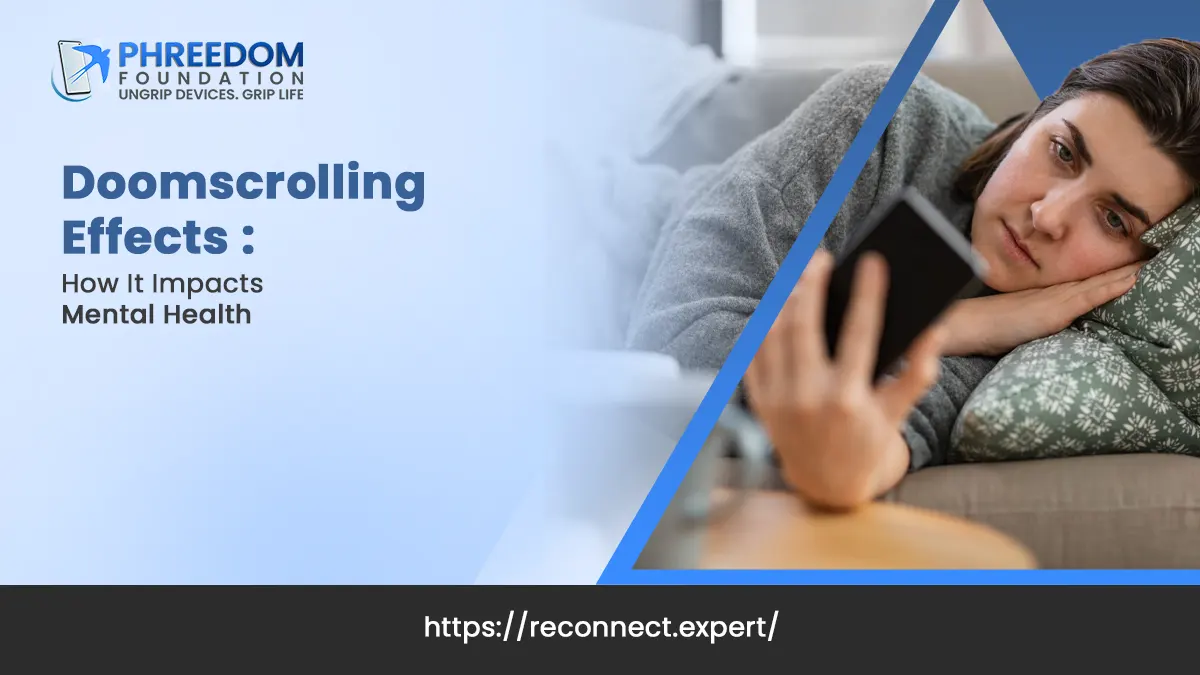
What Is Doomscrolling?
Doomscrolling is the habit of continuously consuming negative or distressing news, even when it makes you feel anxious, overwhelmed, or unsettled.
It often happens late at night or during idle moments. You pick up your phone for a quick check, and before you know it, you have gone through dozens of upsetting headlines.
It may seem harmless. But over time, it creates a cycle where negativity feeds more negativity.
Why Do People Doomscroll?
Understanding why we do it is the first step toward changing it.
Common reasons include:
- Fear of missing out (FOMO)
- Wanting to stay informed
- Habitual phone use
- A natural tendency to focus on negative information
The brain is wired to detect threats. Negative news grabs attention faster than positive content. That is why it is so easy to keep scrolling.
The Link Between Doomscrolling, Anxiety, and Depression
One of the most concerning aspects of doomscrolling is its connection to anxiety and depression.
When you repeatedly consume distressing content, your brain stays in a constant state of alert.
This can:
- Increase anxiety and worry about the future
- Create feelings of helplessness and low mood
- Raise stress hormones like cortisol
Over time, this becomes a loop. The more you scroll, the more anxious you feel. The more anxious you feel, the more you scroll.
Major Effects of Doomscrolling on Mental Health
1. Increased Anxiety
Doomscrolling fills the mind with fear-based content. Over time, the brain begins to expect the worst.
2. Poor Sleep
Late-night scrolling exposes you to both negative content and screen light, making it harder to fall and stay asleep.
You may notice:
- Difficulty falling asleep
- Waking up during the night
- Feeling tired in the morning
3. Emotional Exhaustion
Constant exposure to distressing information drains emotional energy. You may feel:
- Overwhelmed
- Irritated
- Mentally fatigued
4. Reduced Focus and Productivity
When your mind is overloaded with negative input, it becomes harder to concentrate. This can lead to:
- Reduced efficiency
- Lack of focus
- Procrastination
5. Negative Thinking Patterns
Over time, doomscrolling can shape how you think. You may begin to:
- Expect negative outcomes
- Make fear-based decisions
- Lose motivation
6. Social Withdrawal
When people feel overwhelmed, they may start pulling away from others. Ironically, this can increase feelings of isolation.
How to Break the Doomscrolling Habit
You do not need to disconnect completely. Small, intentional changes can make a real difference.
- Set limits on when and how long you check the news
- Avoid scrolling late at night
- Turn off nonessential notifications
- Replace scrolling with a short walk or conversation
- Be mindful of how certain content makes you feel
Pause and ask yourself:
Is this helping me, or hurting me?
Final Thoughts
Doomscrolling may feel like a normal habit, but its impact on mental health is real.
From increased anxiety to emotional exhaustion, the effects can build slowly over time.
Awareness is the first step. Small changes are the next.
At Phreedom Foundation, we help individuals and communities break free from harmful digital habits and build healthier relationships with technology.
You do not need to give up being informed.
But you do need to protect your attention.
Ungrip devices. Grip life.