
We are more digitally connected than ever in human history — and lonelier, more anxious, and more depressed than ever before. Dr. Nidhi Gupta, physician, TEDx speaker, and digital wellness expert, delivers the keynote that explains why this is happening and what we must do now.
Surge in youth anxiety & depression since 2012
Rise in youth suicide rates — the Anxious Generation
Teens almost constantly on social media every day
Get availability & a custom proposal within 24 hours
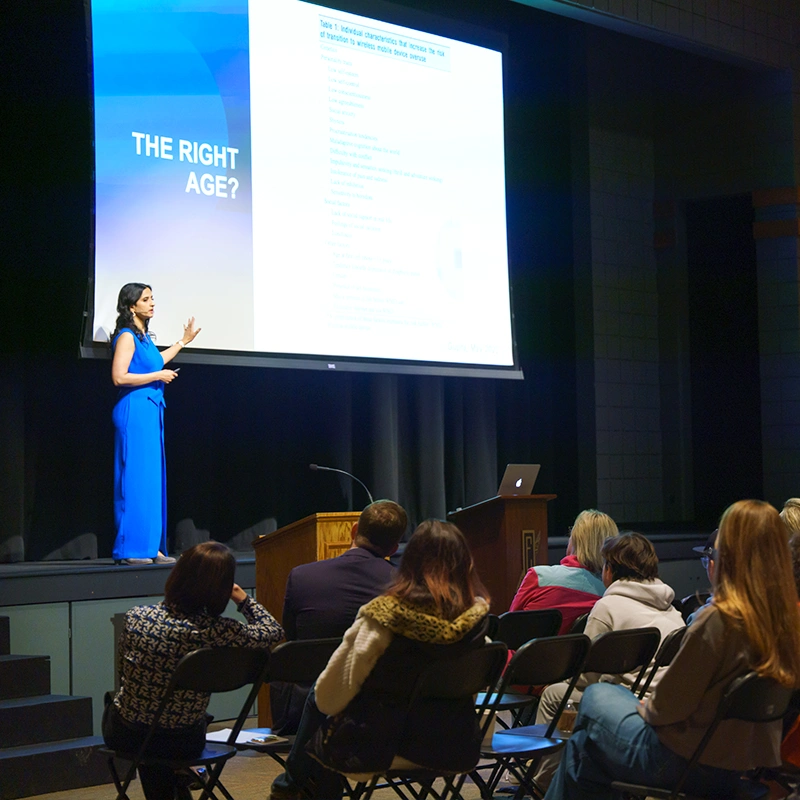
"Everyone is busy on the touch screen, though no one is really in touch! We are in the midst of a major mental health crisis and an emerging epidemic of loneliness."
— Dr. Nidhi Gupta, Founder, Phreedom FoundationIn 2023, U.S. Surgeon General Dr. Vivek Murthy issued a landmark advisory: loneliness is a public health epidemic. Not a social trend. Not a generational quirk. An epidemic — with health consequences comparable to smoking 15 cigarettes a day.
We live in the most digitally connected era in human history. Yet rates of loneliness, anxiety, and depression — particularly in young people — have reached historic highs. Something is profoundly wrong. And the research increasingly points to the same culprit: the mass displacement of real human connection by smartphones and social media.
Scrolling through a curated highlight reel of others' lives is not the same as sitting across from a friend. Technology creates the illusion of connection while systematically replacing it.
Adolescence is the critical window for social-emotional development. Replacing face-to-face interaction with screen time during this period has measurable, lasting consequences for anxiety, self-esteem, and emotional regulation.
Adults aren't immune. Remote work, hybrid schedules, and always-on digital communication are producing a generation of professionals who feel profoundly isolated even in full-time employment — driving burnout, turnover, and disengagement.
This is not a willpower problem. This is a design problem — and understanding the mechanism is the first step to solving it.
Every notification triggers a surge of dopamine — the brain's reward chemical. This creates compulsive checking behavior that is neurologically identical to addiction. "There are only two industries that call their customers 'users': drugs and computers." — Edward Tufte
With a finite number of hours in a day, time spent on screens displaces sleep, physical activity, face-to-face relationships, and creative pursuits — the exact activities that protect against anxiety and depression.
Social media exposes users to a relentless highlight reel of others' lives, triggering chronic social comparison, fear of missing out, and a persistent sense of inadequacy that drives anxiety and depression — especially in adolescents.
Blue light and nighttime phone use suppress melatonin, fragment sleep architecture, and create a chronically sleep-deprived generation. Sleep disruption is one of the strongest predictors of anxiety, depression, and cognitive decline.
In 2012, something changed. Youth mental health data that had been stable for decades began a sharp, sustained decline. Rates of anxiety, depression, self-harm, and suicide rose across every demographic — girls and boys, every income level, every ethnicity. Research consistently points to one major shift that happened simultaneously: the mass adoption of smartphones and social media.
This is the Anxious Generation — and understanding what happened to them is not just important for parents and educators. It is a matter of public health, national security, and the future of human connection.
"The data is alarming. The Anxious Generation is not failing — they are fighting a system specifically engineered by billion-dollar tech companies to capture and monetize their attention, at the cost of their mental health."
— Dr. Nidhi Gupta, Phreedom Foundation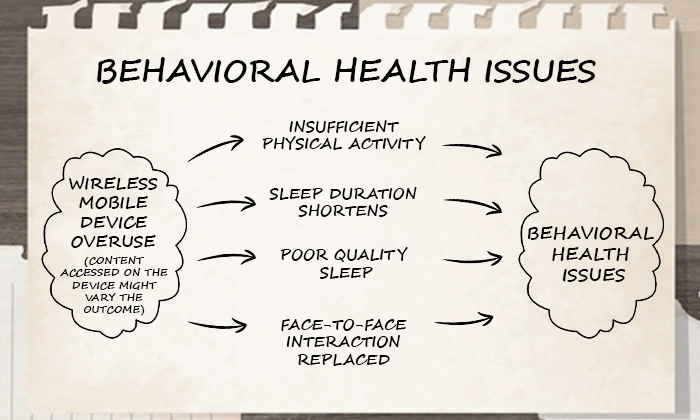

The epidemic of loneliness is the defining paradox of the digital age. Humans have never had more ways to communicate, more platforms to share, or more "connections" in their digital networks. And yet the United States Surgeon General has declared loneliness a public health crisis. The United Kingdom has a Minister for Loneliness. Research shows that loneliness increases mortality risk by 26%.
This is because digital connection is not a substitute for real human connection. It is a simulation. And the simulation, consumed at massive scale, actively displaces the real thing.
"Phreedom Foundation helps you reclaim your focus, well-being, and joy. We equip people to use technology as a tool, not a trap, while addressing epidemic loneliness."
— Mission Statement, Phreedom FoundationThe Phreedom Foundation's approach is not to eliminate technology or lecture people into putting their phones down. It is to give schools, organizations, and communities the knowledge, tools, and frameworks to use technology as an instrument of human flourishing — not a replacement for it.
Dr. Gupta's guiding principles: Knowledge empowers → Attitudes change → Practices transform.
Education: Understanding the neuroscience of dopamine and social media addiction removes shame and replaces it with agency
Community Awareness: Through seminars, events, and workshops, we build shared norms that normalize balance
Advocacy: We work with policymakers, school administrators, and media to change the structural narrative around screen time
Balance: Finding time for what you need to do and what you want to do — without technology defining either

Available for schools, corporations, healthcare systems, community events, and conferences — in-person and virtually.
A powerful, compassionate keynote for students, parents, and educators — exploring the epidemic of loneliness and anxiety, the science behind the Anxious Generation, and what schools can do to reclaim student wellbeing.
Dr. Gupta’s most-requested keynote — a 60–90 minute immersive journey into the science and human story of the loneliness epidemic, anxiety, depression, and the path to authentic reconnection.
A workshop designed specifically for corporate teams navigating the “always-on” trap — addressing digital burnout, workplace loneliness, and the anxiety and depression that affect even high-performing employees.

"The two guiding principles for Dr. Gupta are knowledge and balance. Knowledge empowers → Attitudes change → Practices transform."
— Dr. Nidhi Gupta, Phreedom Foundation"How to Heal the Unspoken Addiction to Smart Devices Impacting All Ages"
Dr. Nidhi Gupta is a physician, award-winning researcher with over 100 scientific publications, and the nation’s leading voice on the intersection of digital technology, loneliness, anxiety, and depression. Her research directly links screen overuse to anxiety, depression, burnout, weight gain, and disrupted sleep across all ages.
She is the founder of the Phreedom Foundation — a 501(c)(3) non-profit dedicated to mitigating screen-induced health disorders and reclaiming authentic human connection. As a parent and a pediatrician, she brings both clinical authority and genuine compassion to every stage she stands on.
Clinical expertise linking screen overuse to anxiety, depression, sleep disorders & weight gain
"How to Heal the Unspoken Addiction to Smart Devices Impacting All Ages"
Calm the Noise — digital wellness guide for the age of distraction
Award-winning researcher — every program is evidence-based
Schools, corporations, healthcare systems — U.S. and internationally
501(c)(3) non-profit — education, community awareness & advocacy
The epidemic of loneliness refers to the unprecedented rise in feelings of social isolation and disconnection across modern societies. Despite living in the age of hyper-connectivity, people — especially young people — report feeling profoundly alone. In 2023, the U.S. Surgeon General declared loneliness a public health crisis, with health consequences comparable to smoking 15 cigarettes a day. Research links this epidemic directly to the displacement of real-world interaction by smartphones and social media.
The Anxious Generation refers to children and adolescents born after approximately 1995 who grew up with smartphones and social media. This generation has experienced unprecedented rates of anxiety, depression, self-harm, and suicide — all of which began rising sharply around 2012, coinciding with the mass adoption of smartphones. Youth anxiety and depression have surged 300%, and suicide rates have risen 30%.
The research is increasingly clear. While no single cause explains every case of anxiety and depression, high screen time and social media use are among the strongest predictors of poor mental health in young people. Key mechanisms include displacement of sleep, physical activity, and face-to-face socialization; social comparison; cyberbullying; dopamine-driven compulsive use; and sleep disruption from blue light and nighttime phone use.
Dr. Gupta's keynote covers the neuroscience of digital addiction and loneliness, the data behind the Anxious Generation crisis, the paradox of digital connection and real isolation, how screen overuse drives anxiety and depression, the displacement of real human connection, and practical evidence-based frameworks for schools, organizations, and individuals to reclaim balance.
Absolutely. The epidemic of loneliness and the anxiety crisis affects adults and professionals as profoundly as it affects young people. Remote work, hybrid schedules, always-on digital communication, and the blurring of work and personal life are producing a generation of professionals who feel profoundly isolated.
No — and this is important. Dr. Gupta's mission is explicitly "not anti-technology; pro-balance." The goal is empowerment — helping people of all ages understand the neurological and behavioral mechanisms at work, and develop the agency to use technology as a tool rather than allow technology to use them.
Fill out the inquiry form on this page or visit reconnect.expert/connect. We respond within 24 hours with availability and a customized program proposal. Dr. Gupta is available for in-person and virtual engagements for schools, corporations, healthcare systems, and community organizations.
Dr. Gupta's groundbreaking book is a personal and scientific guide to reclaiming time, attention, and joy in a constantly connected world. It is a wake-up call to the epidemic of loneliness and anxiety — and an empowering roadmap out of it.
This is not a book about children's screen time. It's about all of us, and the habits we must shift if we hope to reconnect with what truly matters.
Every speaking engagement generates book interest. Every book purchased leads to speaking opportunities. Together, they build the movement.
The epidemic of loneliness, the rise of the Anxious Generation, and the surge in anxiety and depression are not abstract problems. They are happening in your classrooms, your offices, and your families right now. Dr. Nidhi Gupta delivers the keynote that explains why — and what we must do.
In-person dates fill 6–8 weeks in advance. Virtual programs have more flexibility. Submit your inquiry today to secure your preferred date — this conversation cannot wait.