
Parents and educators are noticing the same pattern: children are spending more time on smartphones, social media, gaming platforms, and other digital devices—and many are struggling to disconnect.
Technology can support learning, communication, and creativity. The concern is not simply that students use devices. It is that excessive or poorly timed device use can quietly interfere with the foundations of student success: sleep, attention, memory, motivation, emotional well-being, and relationships.
These effects are not always obvious. A student’s grades may begin to decline, homework may take longer, or classroom participation may decrease without anyone immediately connecting those changes to digital habits.
Understanding that connection is an important first step toward helping students develop a healthier relationship with technology.
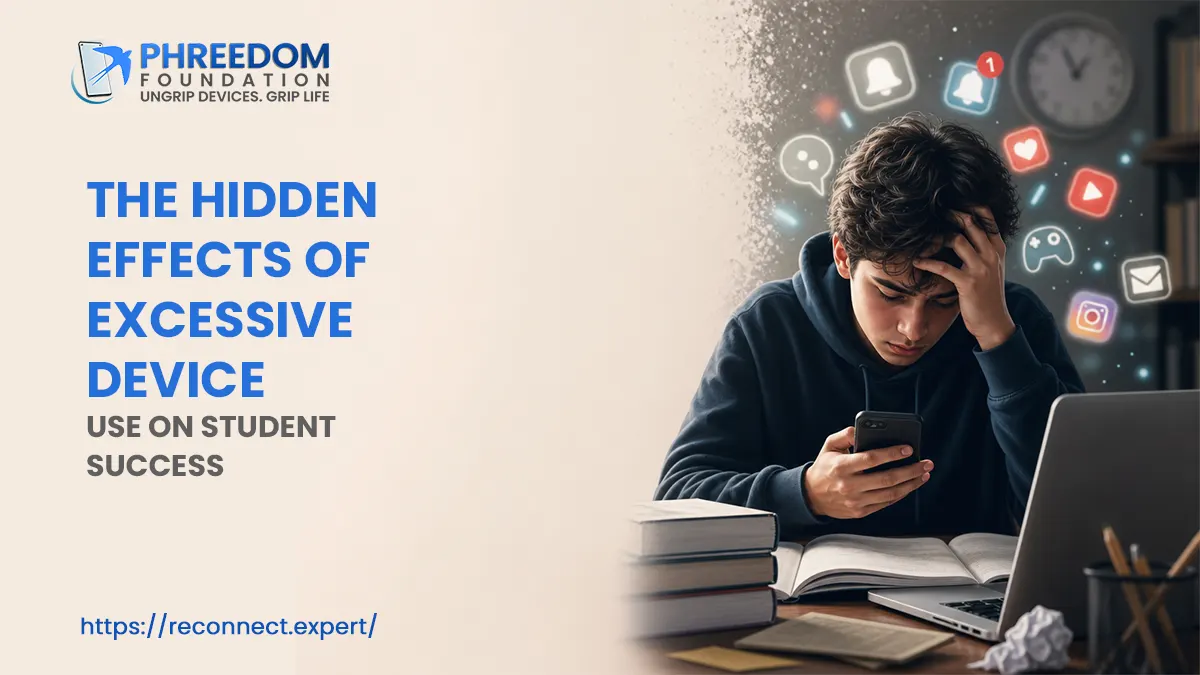
A student who once performed well may gradually begin missing assignments, struggling to concentrate, or appearing disengaged in class.
This is not always laziness or a lack of ability. Digital distraction can make it difficult for students to sustain attention long enough to complete demanding academic work.
A child may sit down to study but repeatedly interrupt the task to check messages, watch short videos, or respond to notifications. Even brief interruptions can fragment attention and make it harder to return to the original task.
Students may spend a long time “doing homework” while completing far less than they realize.
Over time, this pattern can affect:
Technology does not have to be removed from education. However, students need protected periods of uninterrupted focus in which their brains can engage deeply with challenging material.
Sleep is essential for learning. During sleep, the brain processes information, consolidates memories, regulates emotions, and prepares for the following day.
Late-night scrolling, gaming, messaging, and video viewing can delay bedtime and make it harder for students to fall asleep. Devices in the bedroom can also interrupt sleep through notifications, vibrations, or the temptation to check one more message.
A sleep-deprived student may appear:
These behaviors are sometimes interpreted as defiance or poor effort when the student may simply be exhausted.
Protecting sleep is one of the most effective ways families can support academic performance, mental health, and healthy development.
The effects of excessive device use extend beyond report cards.
Children and adolescents also need opportunities to experience boredom, tolerate frustration, solve problems independently, and participate in face-to-face relationships.
When every quiet moment is filled with digital entertainment, students have fewer opportunities to develop these skills naturally.
Excessive device use may also contribute to challenges with:
Social media adds another layer. Students may compare their everyday lives with carefully selected images of other people, worry about likes and comments, or feel pressure to remain constantly available to friends.
For a young person, these experiences can create very real anxiety, even when adults do not immediately see what is happening.
Parents and teachers regularly remind students to put their devices away. Yet repeated warnings alone rarely create lasting change.
Students are more likely to reconsider their habits when they understand what technology is doing to their attention, sleep, emotions, and behavior.
An effective school digital wellness speaker does not simply tell students that phones are bad. The goal is to help students understand:
This approach replaces shame and fear with knowledge, self-awareness, and practical skills.
Students sometimes respond differently when the message comes from someone outside their usual family or school environment.
A qualified school keynote speaker on digital wellness can bring together neuroscience, relatable stories, interactive activities, and age-appropriate strategies. This creates space for students to ask honest questions and examine their own habits without feeling that they are simply receiving another lecture.
A single presentation is not a complete solution. However, it can begin an important conversation and give students, parents, and educators a shared language for discussing digital habits.
The strongest programs extend beyond a student assembly and include parent education, educator training, and practical follow-up resources.
Small, consistent changes are often more effective than dramatic rules that are difficult to maintain.
Families can begin by:
Schools can support these efforts by:
When families and schools work together, students receive a more consistent message: technology is useful, but it should not displace sleep, learning, relationships, movement, or childhood.
Students need digital literacy to thrive in the modern world. They also need the ability to focus, think deeply, manage discomfort, build relationships, and step away from technology when it is no longer serving them.
These skills will not develop through rules alone. They require education, practice, adult role modeling, and a culture that values attention as much as access.
Phreedom Foundation provides evidence-based digital wellness keynotes and workshops for students, parents, educators, and school leaders. Led by pediatric endocrinologist, TEDx speaker, bestselling author, and digital wellness expert Dr. Nidhi Gupta, the programs help school communities prepare students for a digital future without digital dependency.
Phreedom Foundation works with schools and districts to create age-appropriate programs focused on healthier technology habits, stronger attention, improved sleep, and student well-being.
Contact Phreedom Foundation to explore a keynote presentation or educational workshop tailored to your school community.