
The Hidden Productivity Drain: Workplace Distractions
Nidhi Gupta, MD
Have you ever reached the end of your workday feeling busy, but not quite sure what you actually accomplished?
You are not alone.
This is one of the most common challenges in today’s workplace, and the real reason is often hidden in plain sight: workplace distractions.
They quietly break your focus and reduce your efficiency without you even realizing it.
In this article, we will look at how distractions work, why they are increasing, and what simple steps can help you take back control of your attention.
What Are Workplace Distractions?
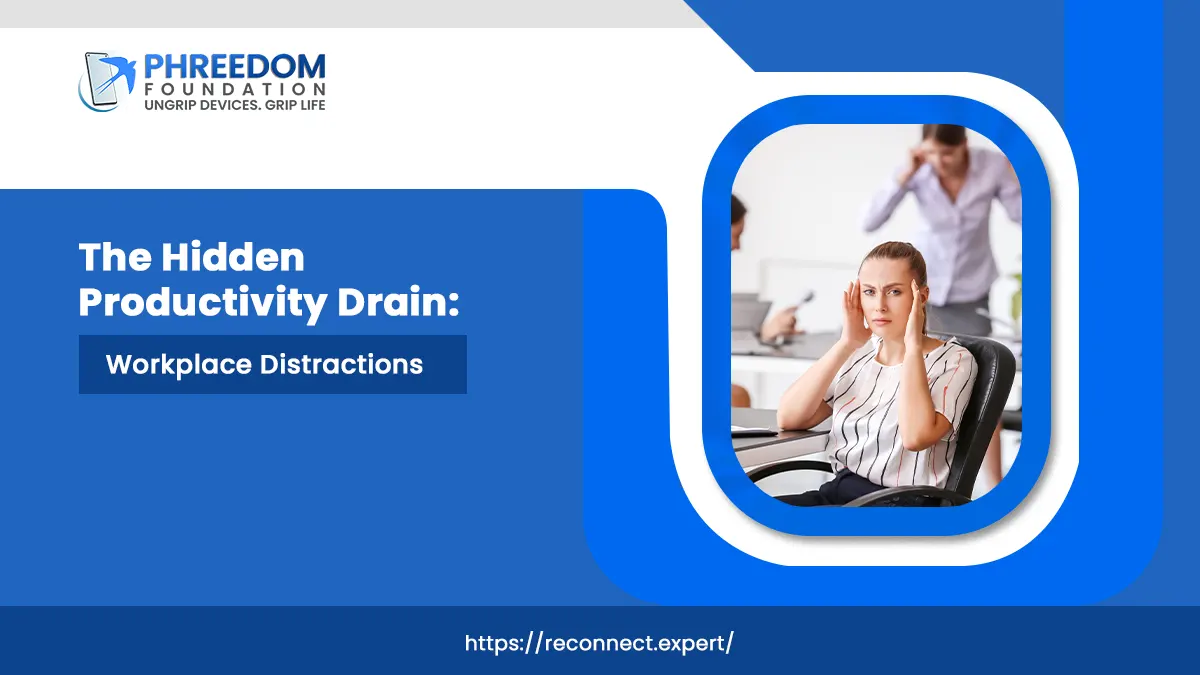
Workplace distractions are anything that pulls your attention away from your main task.
They are not always obvious.
Sometimes it is a quick phone check.
Sometimes it is switching between tabs.
Sometimes it is replying to one more message.
Most people think distractions are external, like noise or interruptions from others. But internal distractions also play a major role. Overthinking, stress, and lack of clarity can disrupt focus even in a quiet environment.
That is why many people struggle to focus even when everything around them seems calm.
The Hidden Nature of Workplace Distractions
One of the biggest challenges is that many distractions feel like work.
- Replying to emails
- Attending back-to-back meetings
- Responding quickly to messages
These activities create the illusion of productivity. But in reality, they often break deep focus.
Consider this. You start working on an important task. A message comes in. Then an email. Then a quick call. Each interruption feels small, but together they disrupt your flow.
By the time you return to your work, your focus is gone.
This is how distractions quietly reduce output without obvious warning.
Why Workplace Distractions Are Increasing
Work has changed.
Distractions are no longer limited to physical spaces. Digital tools have made them constant and harder to avoid.
The biggest driver is the “always available” culture. There is an expectation to respond quickly to emails, messages, and calls. This creates pressure to stay connected instead of staying focused.
Another factor is multitasking.
Many people believe multitasking saves time. In reality, it does the opposite. Every time you switch tasks, your brain has to reset. This increases mental load and reduces efficiency.
The Real Impact on Productivity
Workplace distractions do more than waste time. They reduce the quality of work.
When focus breaks repeatedly, it becomes harder to enter deep work. Tasks take longer. Creativity declines. Output suffers.
Over time, this leads to a familiar pattern:
- You feel busy all day.
- But at the end of the day, you feel unproductive.
Mental fatigue is another major impact. Constant task switching drains energy quickly. Even long hours of work do not translate into meaningful progress.
A Deeper Insight Most People Miss
Not all distractions come from outside.
Sometimes, we create them ourselves.
When a task feels difficult or unclear, the brain looks for an escape. That is when we reach for our phone, check social media, or shift to easier tasks.
This is not laziness. It is a natural response to discomfort.
The solution is simple.
Break your work into smaller steps. Start with one manageable task instead of focusing on the entire project.
Once you begin, momentum builds.
Signs You Are Experiencing Workplace Distractions
You may not notice distractions directly, but you can see their effects.
- You feel busy but not productive
- Simple tasks take longer than expected
- You frequently switch between tabs or apps
- You feel mentally tired after a light workload
These are signals that your attention is being fragmented.
How Phreedom Foundation Can Help
At Phreedom Foundation, we focus on helping individuals and teams reclaim their attention in a distraction-filled world.
Our approach is practical and grounded in behavior change.
Instead of just talking about productivity, we help you build systems that reduce distractions and support deep focus.
Small changes in how you manage your environment can lead to meaningful improvements in how you work.
Final Thought
Workplace distractions are one of the biggest hidden drivers of low productivity today.
They reduce focus, increase stress, and quietly drain energy.
The good news is that the solution is not complicated.
With awareness, simple boundaries, and intentional habits, you can take back control of your time and attention.
Your productivity depends on where your attention goes.
Choose it wisely.
Ungrip devices. Grip life.